Where is the money line in your hand?
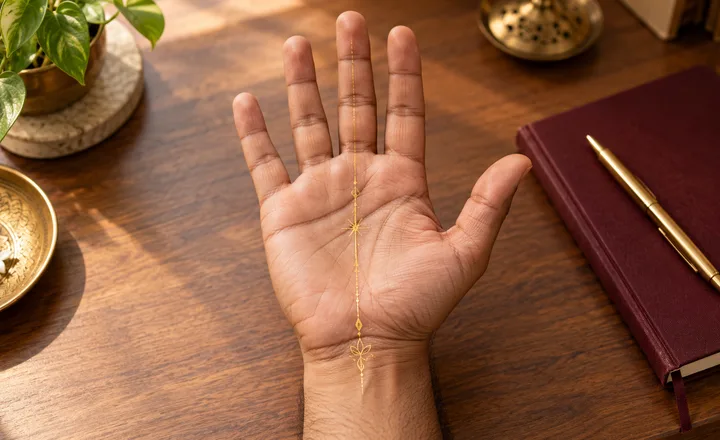
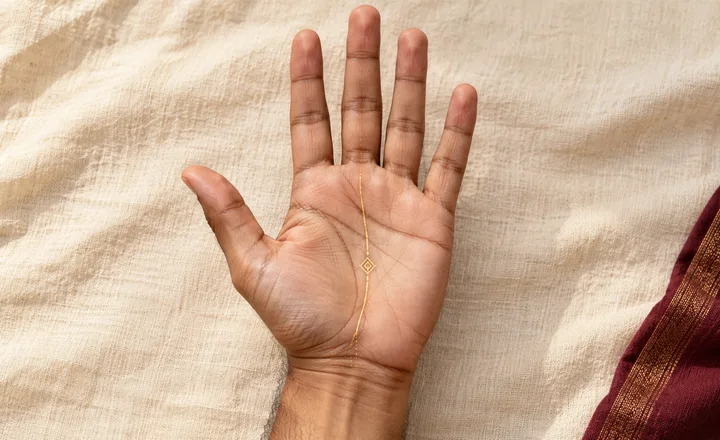
“Money line” is an informal palmistry label rather than one universally defined crease. Depending on the tradition, it can refer to marks below the little finger, the sun line below the ring finger or the central fate line. These features are commonly interpreted through themes of work, recognition and ambition. Identify the exact feature first so the explanation has a clear basis.
Why money-line diagrams often disagree
If you search “wealth line palmistry,” you may find several diagrams pointing to different parts of the hand. The disagreement is important. It means the phrase does not describe a single agreed feature with one standard meaning.
Before interpreting your palm, ask which mark is being discussed. Is it a central vertical crease, a line towards the ring finger, or small marks near the little finger? A responsible explanation names the location and describes what can actually be seen. Check the location first, then follow the explanation of its traditional theme.
Three features people may call a money line
Fate or career line
This is usually a vertical crease in the central palm. Traditional readings link it with direction, work and responsibilities. Our career-line guide explains how to locate it.
Sun or Apollo line
This name is commonly used for a vertical feature towards the ring finger. Historical palmistry discusses recognition around this area. Recognition can mean many things in a symbolic reading; it is not identical to financial wealth.
Marks beneath the little finger
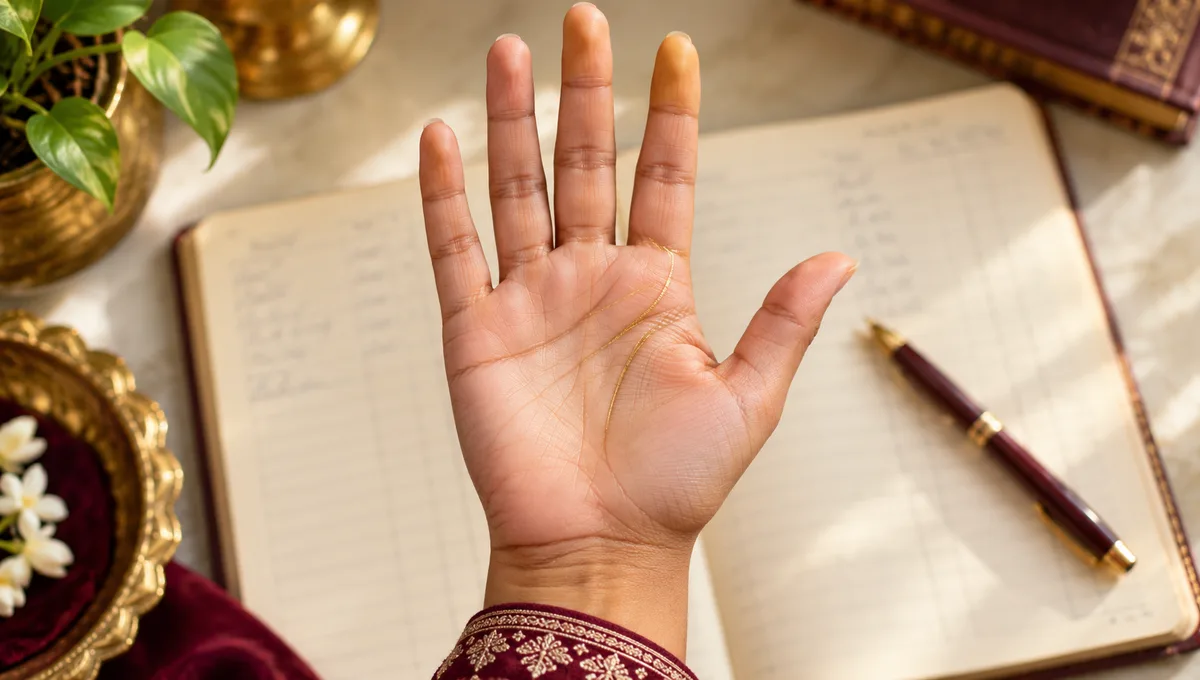
Some contemporary diagrams label fine vertical marks here as money lines. The area is traditionally associated with Mercury. Different schools assign different meanings, so a reading should avoid pretending there is one universally accepted interpretation.
These locations explain why two diagrams may use the same name for different features. Identifying the area first makes the interpretation easier to follow.
From visible feature to traditional theme
| Visible observation | A reasonable statement | An unsupported leap |
|---|---|---|
| A clear central vertical crease | This may be discussed as a work-direction symbol | You will become rich |
| A fine feature below the ring finger | Traditions may connect this with recognition | You will earn a fixed amount |
| Several small creases | Multiple fine marks are visible | You have several income sources |
| No clear feature in the area | The image gives limited detail | You will struggle financially forever |
Use the middle column to understand the traditional theme, then compare it with your own experience. The location and visibility should remain clear throughout the explanation.
Does a deep line mean wealth?
No reliable connection between line depth and wealth can be established through a palm reading. Lighting, hand position and camera contrast can make the same crease look stronger or weaker. Even an accurately observed deep crease does not prove high income.
Real financial situations involve many circumstances: opportunities, skills, commitments and decisions. A reading should not erase those differences by dividing people into “rich hands” and “poor hands.” Such labels can create false confidence or unnecessary shame.
A useful way to reflect on money and ambition
If a traditional interpretation mentions persistence or recognition, connect it to something you can examine. Where have you consistently completed useful work? Which skills do people recognise? Are you seeking money itself, security, independence or appreciation?
Write one example for each theme that resonates and one example that does not. You do not need to make your experience fit the reading. Noticing a mismatch is part of using it thoughtfully.
You might also separate your goals:
- Work: what kind of responsibility or skill do you want to develop?
- Recognition: whose feedback actually matters to you?
- Independence: what does having more choice look like in daily life?
- Spending habits: what patterns do you already notice yourself?
These are reflection prompts. A palm reading is not a substitute for qualified financial guidance, and no palm symbol should determine borrowing, investing or gambling decisions.
Why “rich signs in palm” need extra caution
A list of supposedly lucky triangles, stars or crosses can encourage you to search until you find something. Fine overlapping creases are easy to turn into shapes, particularly when you already hope for a positive result.
Ask whether the shape is clear in the original photograph and whether another person would identify it without being prompted. If not, treat it as uncertain. A photo analysis should not manufacture a fortunate symbol to make the reading more exciting.
Consider the whole reading without turning it into a verdict
A wider interpretation connects work, recognition and thinking-style themes. Read the fate-line guide to understand how direction and changing influences are discussed.
If your real question is whether independent work fits your life, see business or job according to astrology. If you are weighing a specific role, the practical comparison in Should I Change My Job? is a useful starting point.
Keep work, recognition and independence distinct
These themes overlap, but they are not identical. Work concerns what you do and the responsibilities you carry. Recognition concerns how your contribution is noticed. Independence concerns how much choice you want in the way you work. A traditional reading becomes more useful when it explains which theme it is discussing.
For example, you may enjoy your work while wanting clearer recognition, or value independence while preferring reliable team support. A single “money line” label misses these differences. Ask the reader to describe the location and then name the theme in plain language.
The wider palm may add context through the head line or career line. Each feature should be explained individually before the reading connects them. That makes it easier to understand why a theme was included and whether it resonates with you.
Turn ambition into a reflection you can use
Recall a piece of work you were proud to complete. What mattered most: solving the problem, helping someone, earning appreciation or having freedom over the process? Your answer can reveal what kind of progress feels meaningful to you.
Then describe a skill you want to develop and how you would recognise improvement. Keep it observable, such as delivering a clearer presentation or completing a task with less support. This gives ambition a concrete shape while keeping palm symbolism in the space of reflection rather than financial forecasting.
Questions you may have
Is there one official money line?
No. The label varies across palmistry schools and online guides. Ask the reader to identify the exact location and traditional terminology before interpreting it.
Do several money lines mean several income sources?
They do not reliably establish that. Small creases are visible features; converting their count into a count of income streams is an unsupported prediction.
Can I use a palm reading for investing?
No. REKHAA interpretations are for entertainment and self-reflection. Palm lines cannot establish investment returns, financial suitability or guaranteed wealth.
Sources & reading notes
These sources explain the traditions discussed in this guide. The article is educational; a personal reading considers your own details.
- Cheiro, Palmistry for All (1916) ↗Historical primary source for palmistry terminology. Its predictive claims and outdated stereotypes are beliefs, not scientific evidence; REKHAA does not endorse them.
REKHAA offers AI-generated traditional interpretations for entertainment and self-reflection. These practices are not scientifically validated and cannot replace medical, financial, legal or other professional advice.